


20+ years reviewing 10,000+ slots, breaking down games honestly to help you make smarter choices and have fun.
In this exclusive deep dive interview, I speak to Chief Product Officer Tony O’Mahony at Relax Gaming about the upcoming Money Train 5 slot, which is certain to be one of the games of the year and among the most played at UK slot sites.
The interview looks at the origins of the Money Train series, its legacy, how the series has evolved, the Money Cart Bonus feature, Bonus Reels, regulation and a closer look at the upcoming game.
Q: Money Train arrived in August 2019 and became a cult favourite that spawned a whole series. Did Relax Gaming have any sense at launch that it would grow into one of the most popular series at UK slot sites?
TOM: “Nobody can honestly claim they knew it would become the phenomenon it did. The team knew they had a strong game with a distinctive mechanic, but the industry is full of great games that never become cultural moments.
What Money Train managed to do was create something players talked about. It wasn’t just another slot release - it became a game people streamed, debated and remembered. Once a game reaches that point, it starts developing a life beyond the game itself.
Looking at it from my perspective, I think it succeeded because it combined an incredibly simple core mechanic with enormous potential for unexpected moments. That’s a really difficult combination to create.”
Q: The Money Cart Bonus, 3 respins that reset every time a symbol lands, is the engine of every game in the series. What was the original design thinking behind that mechanic, and why do you think it resonated so strongly?
TOM: “The brilliance of the mechanic is its simplicity. Players understand it almost immediately: land a symbol, reset the respins and keep the feature alive. It gives the round a clear rhythm and makes the stakes of every spin instantly understandable.
Underneath that simple rule, however, there is incredible depth because every symbol can fundamentally change the state of the round. Players know the entire outcome can turn on a single landing, and that creates genuine tension right through the feature. It is easy to understand, but almost impossible to predict, which is exactly what produces those memorable moments.”
Q: The series has a very distinctive Wild West-meets-steampunk identity, with the gang of bandits at its heart. How important is that world and those recurring characters to the brand’s appeal?
TOM: “The world and its recurring characters are hugely important because mechanics create gameplay, but worlds create emotional attachment. Players may not remember every multiplier they hit, but they remember characters such as the Collector or the Necromancer because, within the bonus, they become personalities in their own right.
Over time, the Money Train series has developed an identity that players can recognise within seconds, and that is incredibly valuable for any franchise and its chance of achieving long-term success. The real challenge for us now is to keep evolving that world and giving it fresh energy without losing the qualities that make it unmistakably Money Train.”
Q: Money Train helped popularise the bonus-buy-style, feature-focused slot. How aware were you at the time that you were helping define a whole sub-genre?
TOM: “I think it’s fair to say that Money Train became one of the defining games of its era, although you do not necessarily know that while you are creating it. The industry has always evolved through landmark titles that inspire others, and Money Train demonstrated just how compelling a feature-led experience could be when the bonus itself became the main event.
Seeing other studios take inspiration from that is a compliment to all of the hard work, time and effort put in by the team, but it also raises the bar for us as a studio.
Once players have seen a format develop across the industry, their expectations move with it, so the responsibility on our side is to keep innovating rather than simply relying on what worked before. That’s what we’ve done and will continue to keep doing.”
Q: Each sequel has roughly leapt in max win, from 20,000x, to 50,000x, to 100,000x, and finally 150,000x in Money Train 4. Was escalating the ceiling each time a deliberate promise to players, or a by-product of new mechanics?
TOM: “Bigger maximum wins naturally attract attention, but they have never been an objective in themselves. Each increase came because the new mechanics created opportunities for bigger combinations.
We would never want to increase the ceiling just for the marketing headline. The gameplay always has to justify the mathematics, and the potential reward has to feel earned through the player experience.”
Q: Money Train 2 introduced the Necromancer and other new bandits, and the series has kept adding special symbols ever since. How do you keep expanding the cast without overwhelming the core feature?
TOM: “Every new character has to answer a simple question: does this create a genuinely new decision space within the bonus? If a symbol behaves too similarly to something that already exists, it probably does not deserve to be there, regardless of how tempting it may be to expand the cast.
We spend a great deal of time making sure every addition feels unique while still fitting naturally into an ecosystem players already understand. In Money Train 5, for example, the addition of the Pyromancer and Ticket Master made sense because of the role they play within the bonus round’s progression mechanic. That connection gives them a clear purpose rather than making them additions for the sake of it.”
Q: The aesthetic has shifted across the series, from Wild West, to a Mad Max-style Money Train 2, to a darker, almost Terminator feel in Money Train 3. How deliberate is that visual evolution from game to game?
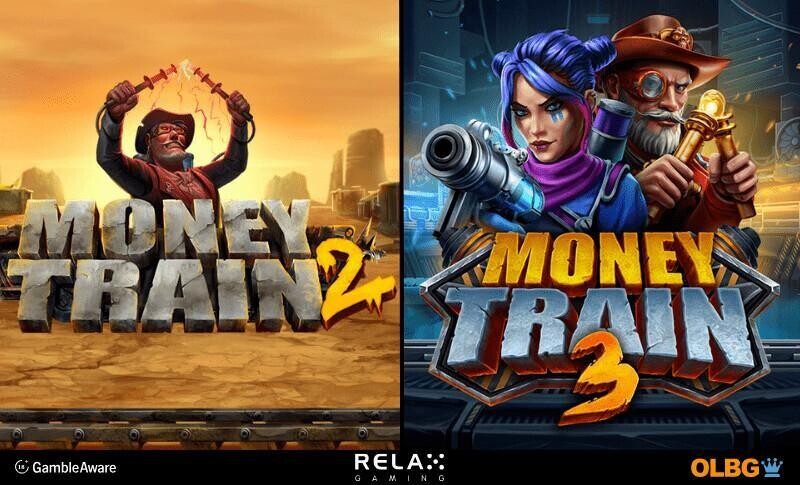
TOM: “That evolution has been very deliberate. We never wanted a sequel to feel as though it was simply the same game with a new texture applied, so each instalment has been given a personality of its own while remaining recognisably Money Train.
Ultimately, I think we’ve experienced great success in this respect, as it would have been just as easy to return to successful themes and still get great feedback thanks to its features and mechanics.
That is the balance every successful franchise is trying to strike: it needs to be fresh enough to surprise players, but familiar enough to feel like home. The visual direction is an important part of achieving that balance from one chapter to the next.”
Q: Money Train 4 moved to a 6×6 grid with Scatter Pays and cinematic, orchestral production. What made you change the format so significantly for the finale?
TOM: “Once you have made several slot sequels, simply adding one more mechanic is not always enough. At a certain point, the underlying structure has to evolve as well if the next game is going to create possibilities that genuinely feel new.
The larger grid opened up more room for symbol interaction and gave the designers far greater scope to build spectacular bonus sequences. It was not change for its own sake; the format changed because it enabled the gameplay ambitions we had for Money Train 4.”
Q: Money Cart slots exist because bonus buys are banned in the UK. How did the Bonus Reels concept come about as a way to give UK players direct access to the feature?
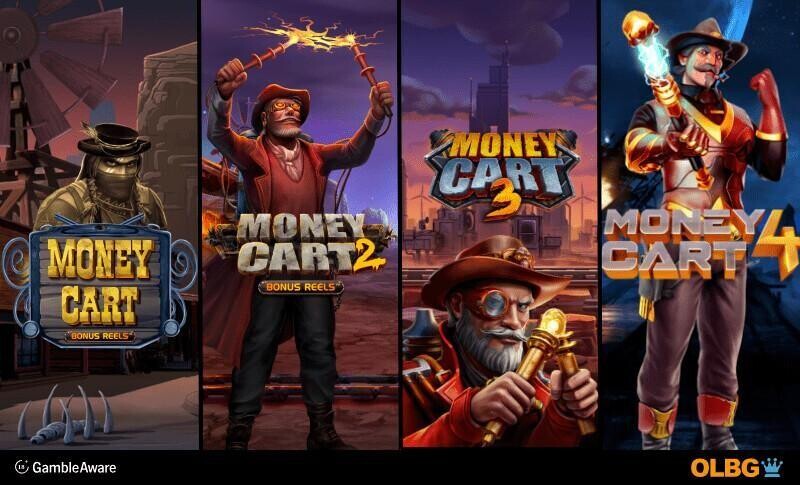
TOM: “Different markets have different regulations, and part of our job is to make sure players can still have a great experience wherever they play. Bonus Reels gave us a way to recreate the excitement of entering the feature directly while remaining compliant with local regulations.
The important point is that we were not trying to replicate Bonus Buy under another name. We designed an experience specifically suited to those markets, so it could deliver that direct route into the action in a way that worked within the relevant regulations.”
Q: How do you approach designing a Money Cart version alongside its Money Train counterpart: is it a parallel build, or an adaptation after the fact?
TOM: “Today, the two experiences are planned together from the beginning. The core gameplay philosophy remains consistent, but each version is designed around the expectations and regulatory requirements of the markets for which it is intended.
That is much more effective than building one product and trying to adapt it at the end. With Bonus Reels, UK players can now enjoy the same game as players in other jurisdictions, albeit without the option to buy directly into the bonus round.”
Q: With bonus-buy restrictions varying by market, how much does regulation shape the way you design and release games across different territories?
TOM: “Regulation is not something you can simply bolt on at the end of development; it shapes the product thinking from day one. If a game is intended to reach players across multiple territories, those different requirements have to be part of the conversation from the outset.
Our aim is to build experiences that remain exciting across multiple jurisdictions without compromising either compliance or player enjoyment. That means considering how the product works in each market as part of the design process, rather than treating it as a final adjustment.”
Q: Money Train 4 was explicitly positioned as the final chapter, with the train said to have left the station for its last destination. What changed internally to convince you the time was right to bring the series back?
TOM: “We genuinely believed Money Train 4 had closed the story, so bringing the series back was not a decision we took lightly at all.
What changed was not commercial pressure to create a brand-new Money Train title, but instead creative confidence: the team began exploring ideas that felt genuinely new rather than incremental.
That was the point at which the conversation changed for everyone here. Once we believed we could deliver something worthy of the Money Train name, the question moved from ‘Should we?’ to ‘Why wouldn’t we?’ Without that confidence in the ideas, there would have been no reason to reopen what we had very much considered a finished chapter.”
Q: Money Train has clearly influenced a wave of similar feature-led slots across the industry. How do you stay ahead now that the format you pioneered has been so widely imitated?
TOM: “The best way to stay ahead is not to copy the people who are copying you; it is to keep experimenting and hitting the mark with what players are enjoying. Players are incredibly sophisticated today, and they can tell the difference between something that is genuinely innovative versus a familiar idea with another multiplier added to it.
That makes our job very clear, even if it is not easy: we have to keep finding ways to surprise them. The format may now be widely recognised, but players still expect a Money Train game to introduce something new. Our responsibility is to keep evolving the experience, not simply repeat a successful formula.”
Q; You've said Money Train 5 had to ‘raise the bar again’ and will be bigger, riskier and more unpredictable. With the max win holding at 150,000x rather than climbing, where does that extra risk and unpredictability actually come from this time?
TOM: “We deliberately chose not to chase another headline maximum win because bigger numbers eventually stop meaning much on their own.
Instead, we focused on the way players experience the journey and gave them more choice over how they want to play. In Money Train 5, they can choose Standard Mode, with a 50,000x maximum win and lower volatility, or Ultra Mode, with a 100,000x maximum win and higher volatility.
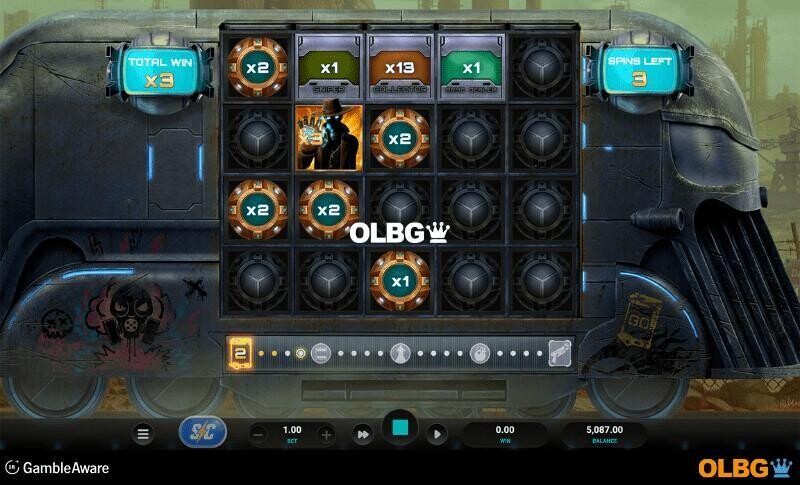
The additional risk comes from the interactions between the mechanics rather than from simply increasing volatility. There are more branching possibilities, more moments when the bonus can completely change direction and more opportunities for extraordinary combinations. It is less about making the destination bigger and much more about making the route towards it more unpredictable.
Q: You have previous talked about only revisiting a franchise when you can add something meaningful, not simply because it's successful. After Money Train 5, is the door genuinely open for the series to keep running, or does each instalment have to earn its place from scratch?
TOM: “I do not think any franchise earns the right to exist forever. Every sequel has to justify itself creatively, because players are incredibly good at recognising when a follow-up exists simply because the previous game sold well.
If we revisit Money Train again, it will be because we believe we have something genuinely new to contribute, not because it is the easy commercial decision. Each instalment has to earn its place from scratch, and that is the standard we want to hold ourselves to.”
Want to play free demo slots?
Want to keep on top of new and upcoming releases?
Subscribe to the Reel Talk: it’s a free weekly slots newsletter packed with exclusive competitions, new slot previews and demos, jackpot alerts, and merch giveaways.


